
Dos categorías de factores influyeron en el desarrollo de la economía francesa entre finales del siglo XVIII y finales del XIX: unos, favorablemente; otros, desfavorablemente. Los últimos parecen haber pesado más que los primeros.
Los factores favorables al desarrollo
Estos factores favorables al desarrollo son de orden institucional y jurídico, por un lado, y científico y técnico, por otro. Forman parte de la herencia revolucionaria y de la obra napoleónica. Constituyen lo que Rostow denomina las “precondiciones” del desarrollo. La Revolución de 1789 liquidó el feudalismo y abolió la servidumbre. Una ley de marzo de 1791 puso fin al régimen de las corporaciones de oficios, que paralizaban la iniciativa individual. Ese mismo año se concedió a los campesinos el derecho de cultivar lo que quisieran. Las antiguas provincias fueron sustituidas por las nuevas demarcaciones que Napoleón acabó de organizar en el marco de una centralización administrativa estricta. Se suprimieron los fielatos entre las provincias, y los hombres, las mercancías y los capitales pudieron desplazarse libremente. El espacio geográfico francés se convirtió así en un mercado único protegido por un elevado arancel exterior.
En mayo de 1790, la Asamblea adoptó el sistema métrico, infinitamente más simple que el antiguo sistema de pesas y medidas y, en consecuencia, susceptible de favorecer los intercambios.
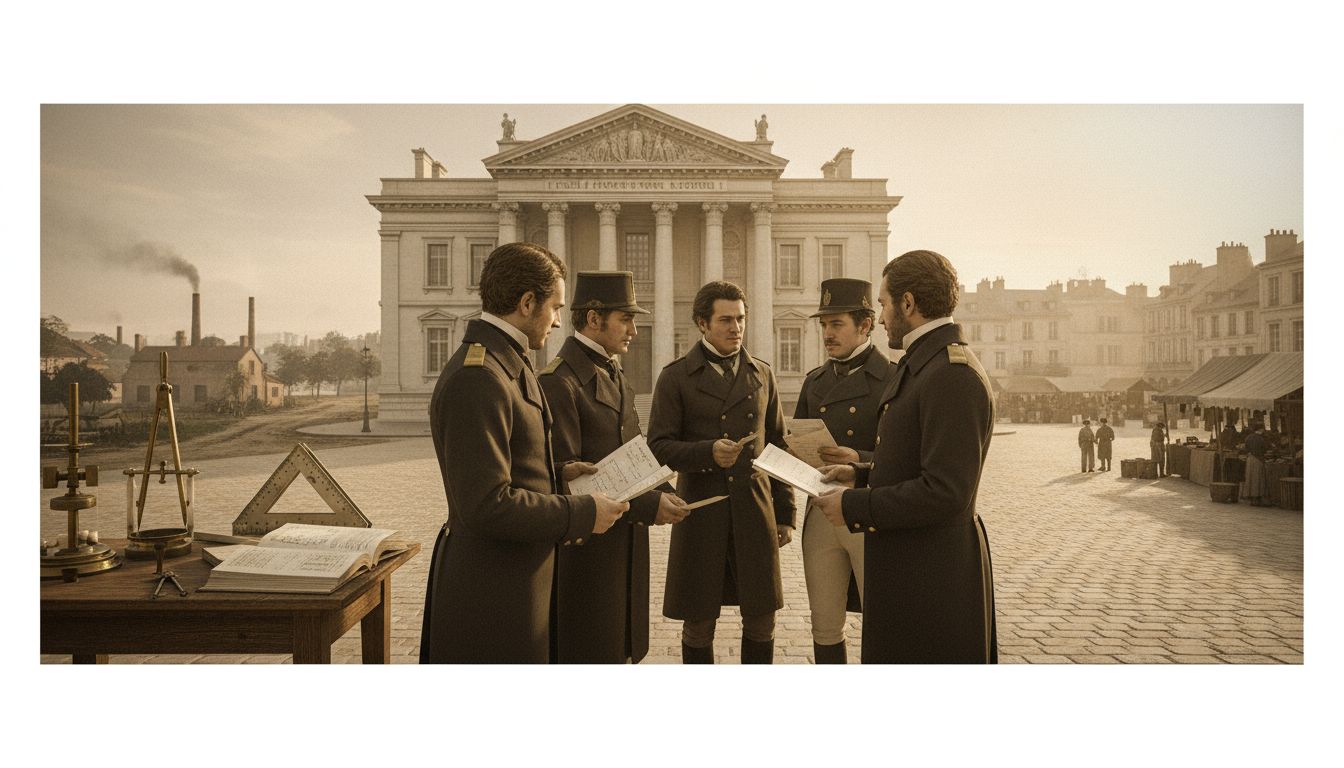
En 1794, la Convención fundó la École Polytechnique para la formación de ingenieros civiles y militares, y la École des Mines. Recordemos que Francia había sido el primer país en tener una escuela de ingenieros al fundarse, en 1747, la École des Ponts-et-Chaussées. En 1793, la Convención transformó el Jardin du Roi en Museo de Historia Natural con el fin de promover la investigación y la enseñanza de la química, la botánica, la biología, la anatomía, la geología, la mineralogía y la agricultura. Entonces Francia era rica en hombres de ciencia tales como Georges Cuvier, Louis Daubenton, Antoine Fourcroy, Laurent de Jussieu, Geoffroy Saint-Hilaire, François de Lacépède, Lamarck y los matemáticos Monge, Lagrange y Laplace.
En 1798, el Directorio fundó el Conservatoire des Arts et Métiers y la École Normale Supérieure. El Conservatoire “coloca en el mismo plano la ciencia aplicada y la teoría” y supo atraer a estudiantes franceses y extranjeros. En toda la reforma de la enseñanza y de la investigación llevada a cabo por la Revolución y el Imperio se hizo hincapié en la importancia de las matemáticas. En un informe preparado por la Commission de l’Instruction publique en 1792, Condorcet escribía: “…Las ciencias matemáticas y físicas ofrecen un remedio contra los prejuicios y la estrechez de espíritu… Aquellos que siguen su evolución ven venir una época en la que su utilidad práctica y su aplicación alcanzarán unas dimensiones que superan nuestras esperanzas… la literatura tiene sus límites, pero las ciencias de la observación y del cálculo no tienen límite”. En 1794, Lakanal insistía en la importancia que tiene para la nación “asegurar que las ciencias matemáticas sean cultivadas y profundizadas ya que confieren la costumbre de la precisión: sin ellas la astronomía y la navegación carecen de guía; la construcción tanto civil como naval no se atiene a regla alguna; las ciencias de la fortificación no tienen fundamento”. Napoleón confirió a la École Polytechnique su estilo militar, pero esto no alteró la calidad de su enseñanza, salvo al final del Imperio y comienzos de la Restauración.
En 1828-1829, un grupo de ingenieros e industriales fundó la École Centrale des Arts et Manufactures, que estaba también destinada a tener un brillante futuro en beneficio de la industria francesa.
Es sorprendente observar la influencia que estas escuelas francesas tuvieron en el extranjero entre el fin del Primer Imperio y la guerra de 1870. Llegaron estudiantes de todos los países del continente europeo y de los Estados Unidos para estudiar la técnica enseñada por los ingenieros franceses. La École Polytechnique sirvió a menudo como modelo para la fundación de escuelas de ingenieros en Praga en 1806, en Viena en 1815, en Estocolmo en 1825, en Alemania entre 1820 y 1830, en Lieja en 1825 y en Zúrich en 1848. La escuela militar de West Point en los Estados Unidos fue fundada con la ayuda de un politécnico que Napoleón había exiliado por sus simpatías republicanas. Es cierto que los imitadores extranjeros, si bien sabían inspirarse en la calidad científica de los programas de las escuelas francesas, no siempre importaban el espíritu militar del Polytechnique. El mundo estima, según E. Cameron, que en 1861 los fundadores del célebre Massachusetts Institute of Technology se inspiraron en la École Centrale.
Entre los más célebres cabe citar a Frédéric Le Play, ingeniero de minas que organizó las minas de carbón y los complejos metalúrgicos del Donetz. La mayoría de los países europeos y algunos de los de Sudamérica pidieron la colaboración de los ingenieros franceses. Llegados a este punto, hay que recordar la influencia de Saint-Simon y de sus seguidores, apóstoles de la industrialización y de sus beneficios. El canal de Suez, el desarrollo del sistema bancario y el crecimiento de los ferrocarriles fueron, directa o indirectamente, de inspiración sansimoniana. Los hermanos Péreire, que fundaron en 1852 el Crédit Mobilier, eran sansimonistas. Pero Saint-Simon no fue el promotor de cualquier tipo de capitalismo, como afirma François Perroux en su Industrie et création collective: “La fecundidad de los industriales, clase ascendente, viene íntimamente ligada con las técnicas colectivas, a propósito de las cuales Saint-Simon y sus seguidores tuvieron una comprensión directa y rigurosa, digna de grandes ‘ingenieros economistas’… Creo que no se ha dado la importancia que se merece a la frase sansimoniana, aparentemente tan simple: ‘la humanidad no está condenada a la imitación’”.

François Perroux señala la amplitud y el alcance de los proyectos y realizaciones sansimonianas: “Todavía joven, Saint-Simon propone la construcción de un canal entre los dos mares al virrey de México (1783) y proyecta otro canal a su paso por España (1787)… Suez y Panamá son obra de ‘la industria’”, dice Enfantin en 1834, y son de todos conocidas las vicisitudes de la sociedad para el estudio del canal de Suez, seguidas del desposeimiento de los sansimonistas por Lesseps. Es posible que se haya olvidado el proyecto de una presa sobre el Nilo, pero todo el mundo sabe el papel doctrinal y práctico de los sansimonistas en la construcción de los ferrocarriles, creadores de mercados y renovadores de las estructuras sociales tanto en Francia como en toda Europa, tal como lo anunció con una lucidez excepcional Michel Chevalier. Las grandes obras públicas permiten la comunicación, en la acepción sociológica del término, a gran escala, lo que engendra nuevas redes de intercambio de poder y de información. Son pues los parientes y los socios de estas técnicas colectivas que, en definitiva, son las organizaciones de unidades plurinacionales”.
Daniel Villey escribía en agosto de 1943 en su Petite histoire des grandes doctrines économiques: “… Después de las divisiones va a hacer falta reunir y coordinar; después de las pugnas entre ideologías políticas, unirse en un esfuerzo común para la explotación económica del globo; y más especialmente en nuestro caso: tras un repliegue sobre la tierra y sobre el artesanado, edificar un nuevo aparato de gran producción industrial… No necesitamos más lecciones que las de la calle Taranne. Quiera Dios que mañana sacuda a toda Francia un gran temblor sansimonista”.
Sin embargo, la influencia francesa en el plano científico y técnico fue disminuyendo hacia finales del siglo XIX. Lo que era revolución en la organización centralizada se convirtió en esclerosis un siglo más tarde. El número de bachilleres oscilaba en torno a las vísperas de la Primera Guerra Mundial. En primer lugar, la enseñanza secundaria y superior se reservaba a un pequeño número de privilegiados de la fortuna y, por otra parte, la oferta de ingenieros y científicos no siguió la ampliación de la demanda. Finalmente, a pesar de este florecimiento del espíritu científico y del espíritu de empresa, la industrialización francesa fue menos rápida que en Gran Bretaña y en Alemania. Aunque es cierto que, al lado de las fuerzas motrices del crecimiento, existieron numerosos factores negativos.