
Beyond cyclical difficulties and the imbalances encountered by the French economy along its path, since 1950 the overall results can be considered satisfactory. With an average annual GDP growth rate of around 4.5%, France ranked fourth among major industrial countries, behind West Germany (7.6%), Italy (5.9%), and the Netherlands (4.9%). Industrial production increased by an average of 7% per year, tending to double every decade.
This growth occurred while the total population rose from 41.6 million in 1949 to 45.18 million in 1960 and over 48 million in 1964. At the same time, the labor force remained relatively stable, at least until the return of French citizens from Algeria in 1962–1963. It stood at 18.86 million in 1949 and 18.84 million in 1959. Thus, productivity gains largely explain the increase in output. Investment and technological progress drove these improvements, along with structural changes in the workforce, particularly the decline in agricultural employment in favor of industry and services.
From over 5 million workers, the agricultural labor force declined to 4.2 million by 1959, reflecting structural adjustments that supported advances in production techniques.
Annual growth rates show only two downturns between 1950 and 1964, notably the 1952–1953 slowdown, which was more a stagnation than a contraction. Economic fluctuations were far more limited than those experienced before the war, and full employment was largely maintained. The main challenges stemmed from inflation rather than from a slowdown in activity. However, aggregate growth figures conceal regional and sectoral disparities, as planning efforts struggled to fully control the spontaneous concentration of resources in already developed industrial areas.
Before examining these imbalances, it is useful to review the objectives of French development plans and their outcomes.
Objectives of French Planning
French planning remains a distinctive and somewhat paradoxical experience. France was the only country to establish medium-term economic programming based on forecasting and strategic choices made at the government level regarding resource allocation, without abandoning a capitalist market economy.
The paradox lies in the fact that indicative planning relies largely on market mechanisms and profitability incentives to guide and correct economic outcomes.
The General Planning Commission was created in 1946 in response to postwar reconstruction needs. It did not stem from a rigid political doctrine but from an empirical approach aimed at stabilizing a market economy that had demonstrated its limitations during the interwar period.
Indicative planning is grounded in comprehensive national-level analysis and provides both government and businesses with tools—akin to “radars” and “signals”—to anticipate potential disruptions. It seeks to reconcile long-term development goals with short-term economic policy objectives, a balance that has proven difficult to achieve.
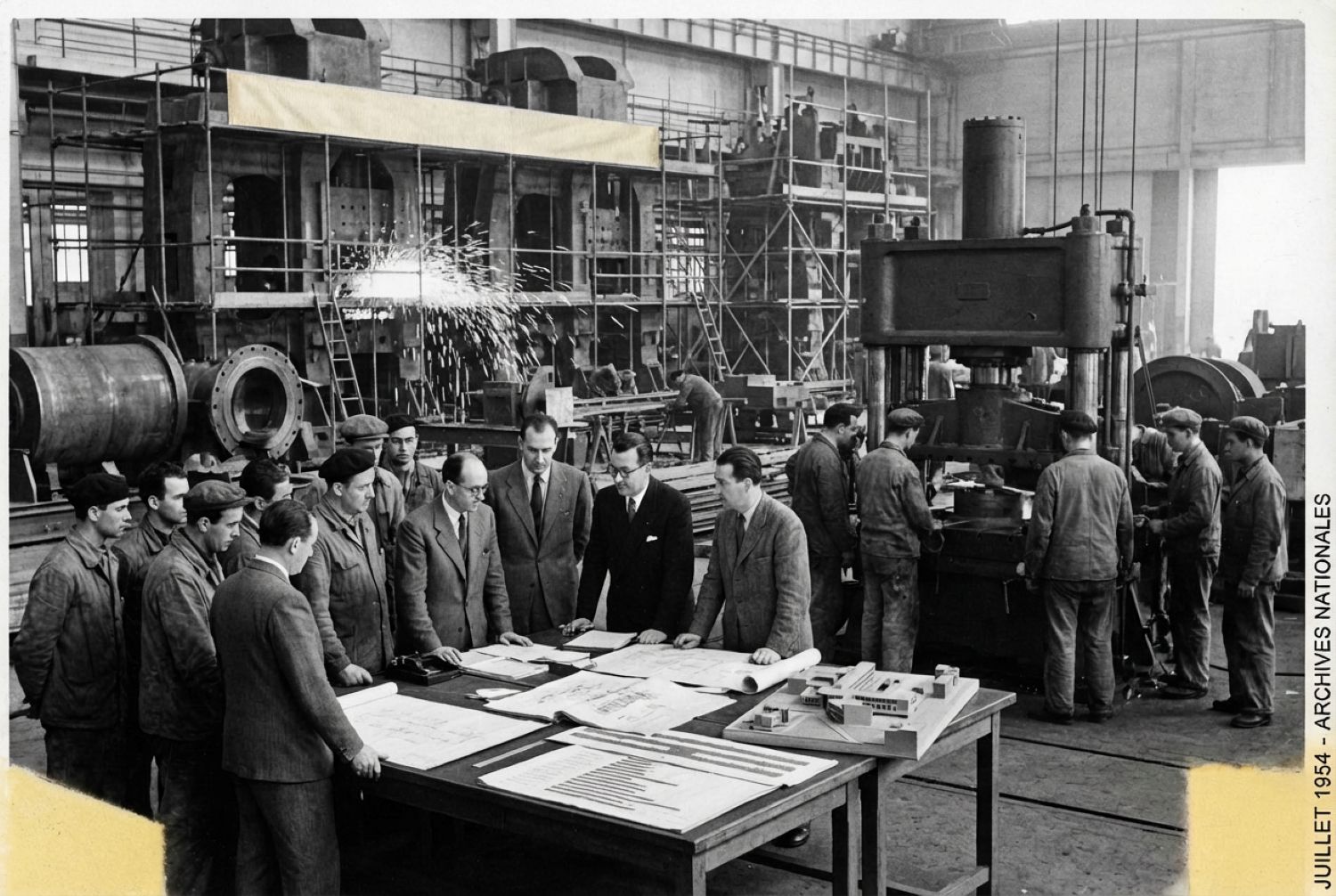
Since 1947, planning objectives have evolved according to changing needs. The first plan, the Monnet Plan (1947–1952), prioritized heavy industry over consumer goods to support reconstruction. Direct controls inherited from the wartime economy enabled the government to allocate resources toward strategic sectors.
While the targets were ambitious, their partial shortfall can be explained by the absence of national accounting data before 1949 and the complexity of postwar conditions. Industrial production in 1952 was expected to exceed 1929 levels by 25%, but it only rose by 12%, partly due to the 1952 recession. Agricultural output was projected to surpass the 1934–1938 average by 16%, yet it increased by only 8%.
Overall, the plan’s objectives were achieved with a one-year delay. By 1952, gross national product exceeded 1946 levels by 39%, 1938 levels by 19%, and even surpassed 1929 levels by 3%.