
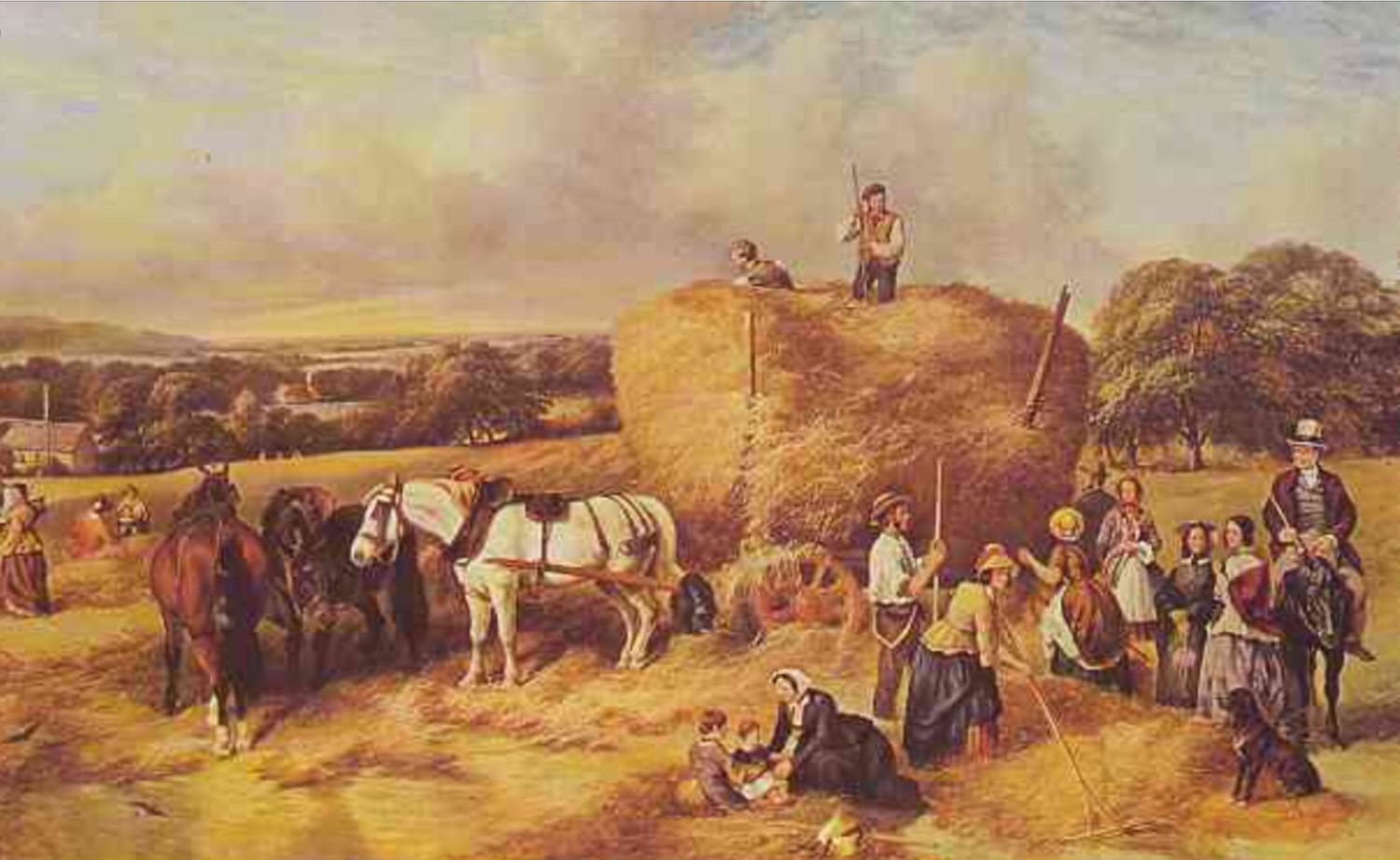
There would have been no Industrial Revolution in England without the “agricultural revolution” that preceded it. “By the time large-scale industry appeared, modern agriculture was already established. All that remained was to break the last resistances of routine.” Agricultural development is one of the necessary conditions for industrialization. The growth of agricultural income, resulting from increased productivity, expands the domestic market. At the same time, higher productivity frees part of the labor force, making it available for industrial needs and increasing the supply of food. All periods of development have seen a notable rise in population; the improvement of agricultural production methods thus makes it possible to meet the new food demands. Between agriculture and industry, mutual pressures can arise not only nationally but also internationally: the demand for agricultural tools increases the need for iron, while the expansion of the textile industry encourages the production of wool and cotton. In short, industrial development could not exist in an economy of a craft-based type without prior or simultaneous agricultural development. In eighteenth-century Great Britain, the agricultural revolution manifested itself through both institutional and technical transformations.
Enclosures
Until the early nineteenth century, England had a large class of small agricultural landowners (yeomen) whose farming methods were shaped by the fragmentation and irregular location of their plots. These small farmers were gradually eliminated during the seventeenth century due to the consequences of the famous law on the enclosure of estates. Between 1700 and 1810, Parliament passed hundreds of Enclosure Acts prescribing “the fencing of open and common fields, meadows, and pastures, and the free and common lands of the parish of…”. In principle, this meant simply enclosing properties, but the real challenge was having the financial means to do so. It is therefore unsurprising that small owners were often forced to give up their rights during this reorganization process.
Originally, however, these laws were not intended to eliminate small owners. The main reason lay elsewhere: in a form of landholding that hindered production — the open-field system. This system was neither “undivided ownership” nor “communism.” As one English author defined it, “open fields, or common fields, are stretches of land containing plots belonging to different owners, dispersed and juxtaposed.” Each plot had a single owner, but each owner’s farm was divided into several scattered parcels. One could not reach their own land without crossing that of neighbors. This fragmentation had a paradoxical effect, given its extreme subdivision: farming was carried out according to common rules. In each parish, the land was generally grouped into three fields, one of which was left fallow. One-third of the arable land was therefore continuously unused. Moreover, individual initiative was constrained by the synchronized schedule of work. The enclosure laws allowed for a reorganization that favored personal initiative.
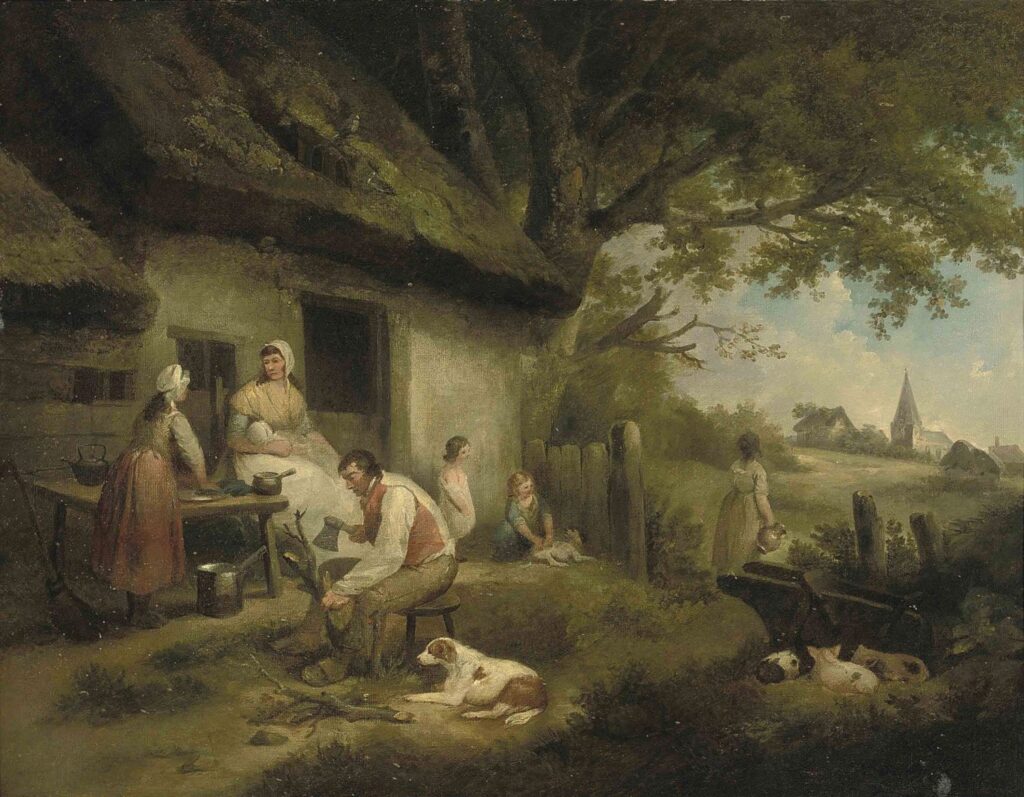
Two categories of people suffered most from the implementation of enclosures and the resulting redistribution of land: small owners, often forced to sell their plots, and cottagers, the poorest rural group who benefited from grazing rights on common lands. These cottagers, whose only property was a few animals, worked both as agricultural laborers and as home-based workers. In Yorkshire, they were weavers, spreading dyed cloth out to dry on common lands.
Without any recognized rights, these cottagers were the first victims of reorganization operations. While in the early eighteenth century enclosures did not always cause rural unemployment — since they reduced fallow land — by the end of the century they often did, due to their rapid expansion and the growth of industry. Regional differences inevitably existed in the impact of enclosures on rural employment. The growth of livestock farming on the large estates created through this process contributed to “freeing” part of the agricultural workforce. This labor force was drawn to the cities by necessity and employed in factories.