
It is also necessary to look for less temporary causes of the improvement in external payments within the country’s structural evolution. The text of the Fourth Plan, published in November 1961, states in this regard that the efforts undertaken by successive governments and firms to modernize the French economy, rapidly increase its productive capacity, and adapt it to international competition had begun to bear fruit. Without the public and private investment carried out since the end of the war, and without the extraordinary growth of the years 1954–1957 that strengthened the productive potential of the most dynamic industrial sectors, there would have been no lasting improvement in France’s international trade, despite the devaluation of 1958.
The structural evolution of the national economy has direct effects on the capacity to export and import, as well as on the composition of trade flows. Two examples illustrate this: the automobile industry and the capital goods industry. Exports of French automobiles increased by 69% in 1959. Exports of machinery and mechanical equipment rose by 27% in 1959 and 37% in 1960, while exports of electrical equipment increased by 4% in 1959 and 30% in 1960.
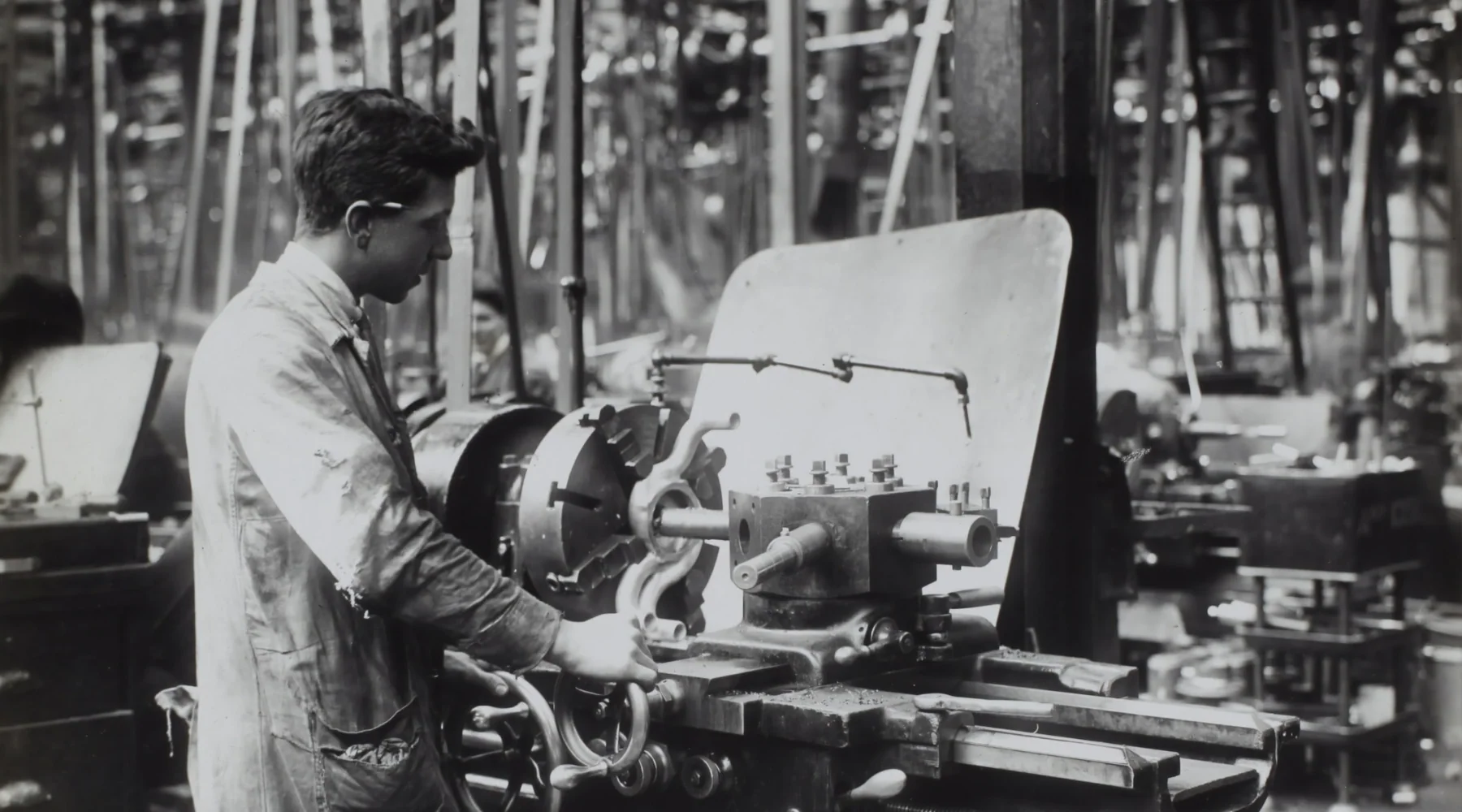
The structural adaptation of an industrial country to international trade requires significant development in the capital goods sector. Global demand for these goods is increasing both in absolute terms and in relative importance. A country with a strong deficit in capital goods would be unable to sustain a phase of rapid growth without risking a new external imbalance. Even if progress in this area before 1958 was insufficient, the general direction of development was satisfactory. Ultimately, the expansion of productive capacity across all sectors constitutes an essential means of gaining access to international markets. As the Report on the National Accounts of 1960 notes, stable or steadily growing exports depend on the ability to replace declining sectors with others capable—both technically and commercially—of penetrating new and expanding foreign markets.
Structural transformations
During the process of growth, the structure of national economies is transformed. The concept of “development” encompasses both the mechanisms of output growth and their effects on the broader economic and social framework. While industrial production accounts for only a quarter of total output in less developed countries, it represents, on average, half of total output in advanced economies. Conversely, the agricultural labor force is proportionally larger in poorer countries.
In all industrial countries, agricultural production has grown more slowly than industrial production. Between 1950 and 1960, annual growth rates in agriculture ranged from 1.5% to at most 3.5%, whereas industrial output expanded more rapidly. This pattern is evident in countries such as Germany and Italy. At the same time, agricultural output increased in volume, accompanied by a significant rise in productivity. Between 1950 and 1960, productivity growth in agriculture was generally higher than in industry. This difference reflects a successful structural adjustment: the diffusion of technical progress in agriculture made it possible to produce more with less labor.
The reallocation of labor from agriculture to industry and services in countries such as Germany, France, Italy, and the Netherlands contributed to a favorable structural adjustment and supported higher growth rates. Agriculture effectively served as a reservoir of labor, while economic expansion enabled a more efficient use of the workforce in the secondary and tertiary sectors. In contrast, Great Britain and Belgium, where agriculture had a relatively small role, did not benefit from this shift. As a result, labor market tensions were more pronounced during periods of full employment, reinforcing inflationary pressures.
The relative weight of economies within the global system also changed. The United States maintained a clear lead but saw its relative importance decline in favor of Western Europe. In 1950, U.S. industrial production accounted for 51.2% of global output, compared with 43.8% in 1960. Over the same period, the share of U.S. manufactured exports in world trade fell from 21.7% to 18.7%, while that of Great Britain declined from 21.9% to 14%. By contrast, West Germany’s share rose from 6.1% to 16.9%. Western Europe’s share of total world exports, which had been 45% between 1920 and 1939 and 35% between 1948 and 1950, increased to 38% in 1953 and 46.5% in 1961. This shift reflects both faster growth rates in Europe and the effects of postwar reconstruction, which began from a relatively low level of production after the disruptions of the Second World War.