
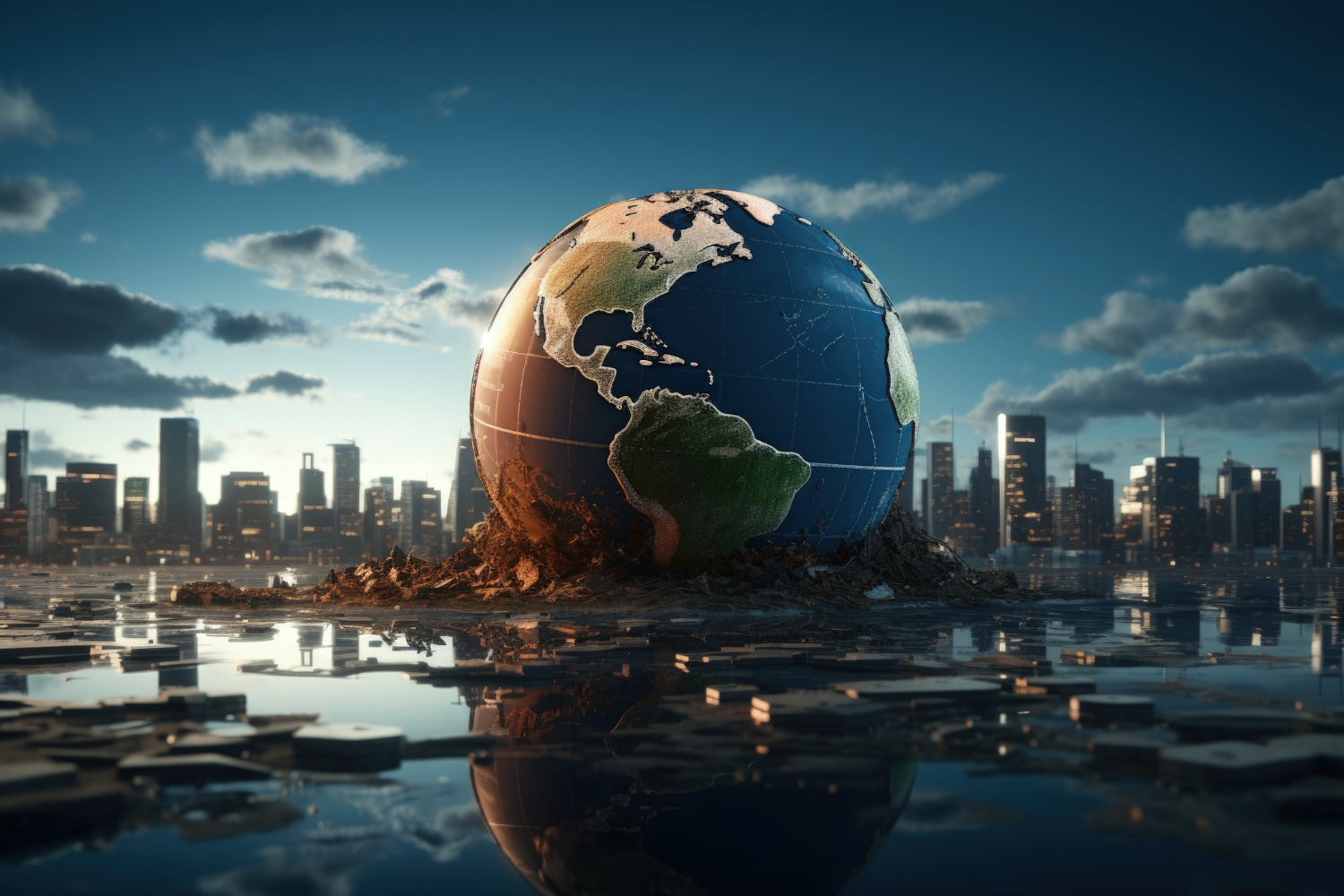
Certain regions are facing a complex scenario that directly affects their development.
The global economy is grappling with numerous challenges, but few are as complex and structural as those faced by developing countries: climate vulnerability, mounting external debt, and the urgent need for economic growth to improve the living conditions of millions.
This triple dilemma not only threatens to stall economic progress but also jeopardizes the social and environmental stability of many regions.
The Triple Threat for Developing Countries
The impacts of climate change are hitting countries in the Global South with particular severity. Floods, droughts, cyclones, and other extreme weather events are disrupting agricultural productivity, damaging critical infrastructure, and causing forced displacement.
According to the World Bank, developing countries could lose up to 10% of their annual GDP by 2050 if urgent adaptation measures are not taken to reduce climate risks.
However, implementing such measures requires substantial investment. Just in climate-resilient infrastructure, the necessary financing could exceed 3% of annual GDP in many developing nations.
This leaves emerging economies facing a difficult choice: invest in climate adaptation or allocate those limited resources to health, education, or productive infrastructure.
The second major concern is public debt. Developing countries have reached historically high levels of debt. The COVID-19 pandemic forced many governments to increase public spending to manage the health crisis and protect their economies, leading to a sharp rise in borrowing.
More than 60% of low- and middle-income countries face high risks of debt distress, according to the International Monetary Fund (IMF). This situation is further worsened by tighter global financial conditions.
With rising international interest rates and a stronger dollar, the cost of debt servicing has soared, absorbing national budgets. In many cases, debt repayments now exceed public investment in sectors such as education or infrastructure.
Amid these structural challenges, developing countries cannot lose sight of a fundamental priority: economic growth. Poverty reduction, job creation, and improvements in quality of life require sustained and sustainable growth rates.
Yet the combination of fiscal constraints, climate vulnerability, and limited access to financing can create a vicious cycle of low growth and high inequality.
The energy transition could also increase fiscal pressure. Sectors like oil, gas, and mining still account for a significant share of GDP and exports in many nations.
In this context, financial expert Fernando Boudourian notes that “emerging markets present great opportunities, but also significant challenges.”
Given this landscape, there’s a growing call to rethink the global financial framework. One concrete proposal gaining traction is the promotion of debt-for-climate swaps (also known as debt-for-nature swaps).
Through these mechanisms, a portion of a country’s external debt is forgiven or restructured in exchange for verifiable commitments to environmental protection and climate adaptation.
In parallel, discussions are advancing around the creation of a new line of multilateral financing focused exclusively on climate resilience.
Ultimately, the triple dilemma of climate, debt, and growth cannot be resolved within the traditional frameworks of economic policy and international cooperation.
What is needed is a coordinated, ambitious, and structural response. The coming decade will be crucial to rewriting the rules of the global development game.