
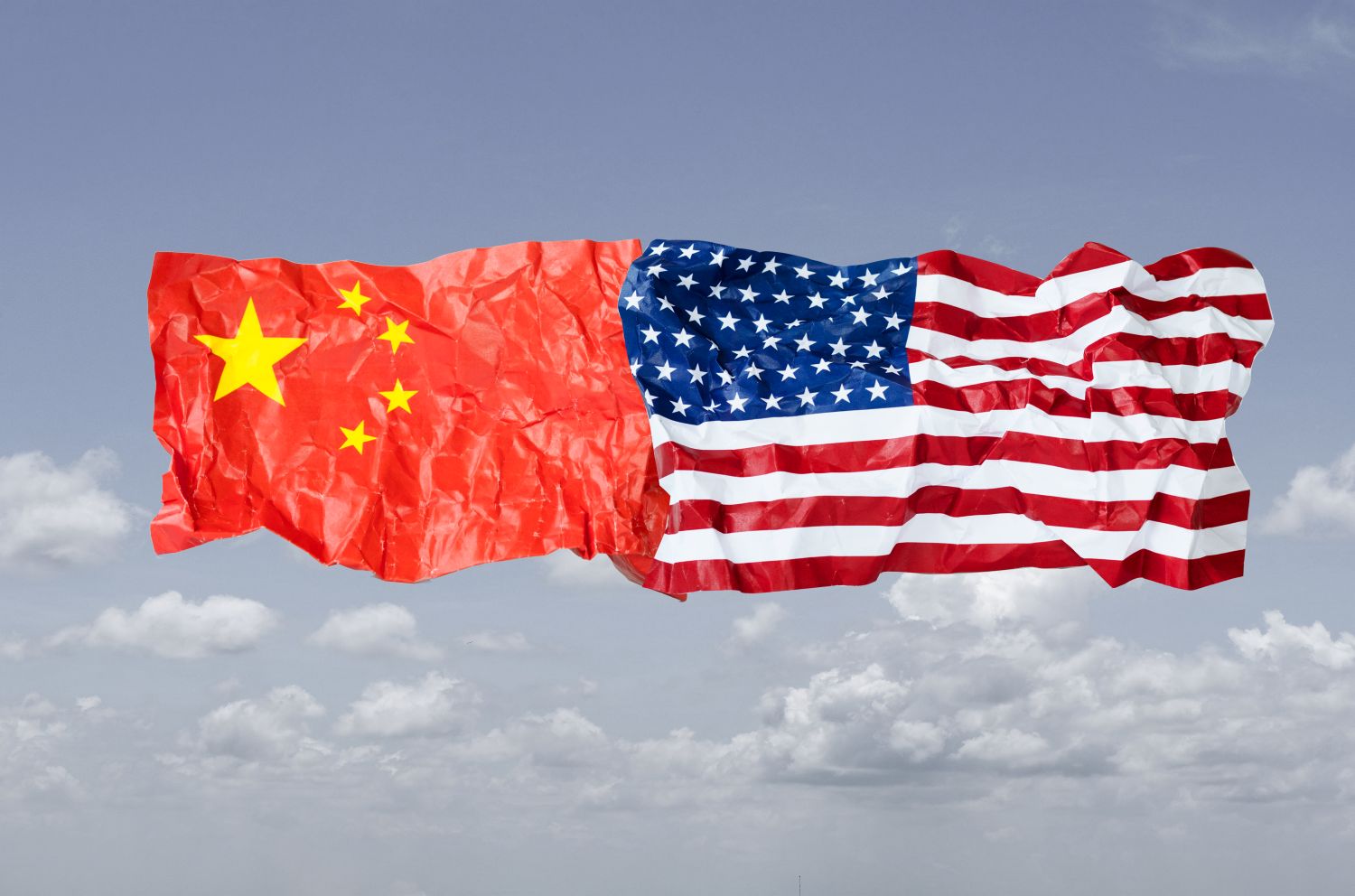
The technological rivalry between the United States and China has entered a new, more public and intense phase. This confrontation is now reshaping global power dynamics and deeply affecting financial markets, as noted by Fernando Boudourian.
Recent regulatory measures, trade restrictions, and sanctions on tech companies have escalated bilateral tensions, prompting investors to reassess strategies in an increasingly volatile global environment.
What began as a tariff war has evolved into a struggle for dominance in strategic sectors such as semiconductors, artificial intelligence, telecommunications, and renewable energy.
The U.S. government has tightened restrictions on the export of advanced technology to China, particularly high-end chips and semiconductor manufacturing equipment. In response, China has ramped up efforts to achieve tech self-sufficiency, increasing investment in research and development.
Restrictions, Fragmentation, and Market Reactions
In recent weeks, the U.S. Department of Commerce has added multiple Chinese firms, including quantum computing and chip giants, to its restricted entity list. These measures prohibit U.S. companies from selling critical technologies without special licenses. Simultaneously, the White House announced tighter scrutiny on American investments in sensitive Chinese tech sectors.
China, on its side, imposed stricter controls on exports of strategic minerals like gallium and germanium—key elements for semiconductor production—seeking to pressure Washington and safeguard its own supply chain interests.
The result is a fragmented tech landscape divided between two incompatible systems. Multinational companies, particularly in advanced manufacturing and global trade, are now compelled to redesign supply chains, diversify markets, and relocate operations to mitigate geopolitical risk.
Political and commercial tensions have driven heightened volatility in stock markets, Boudourian explains. Tech indices such as the Nasdaq Composite have dropped following announcements of new restrictions, reflecting investor concerns about the growth prospects of leading tech firms.
Companies like Nvidia and AMD have seen declines in valuation due to sales limitations on high-performance chips to Chinese clients. In Asia, Chinese giants such as Alibaba and Tencent face internal regulatory pressure and the weight of foreign sanctions.

Meanwhile, the Chinese yuan continues to depreciate against the dollar amid commercial uncertainty and capital flight. Conversely, the U.S. dollar is gaining strength as a safe-haven asset, despite broader concerns over the global economic slowdown.
Semiconductors remain the most affected sector. Restrictions on advanced chip exports impact not only Chinese firms but also the revenues and growth potential of U.S. manufacturers who now face barriers to accessing one of the world’s largest markets.
China’s push to build an autonomous chip supply chain may reshape the global semiconductor industry in the coming decade. State-backed funds are pouring capital into local chip startups, while domestic companies accelerate development of proprietary technologies to reduce foreign dependency.
For investors, this scenario amplifies geopolitical risk and raises concerns over the financial performance of tech companies and global stock indices amid a deepening “technological decoupling.”
Asset managers are adopting broader geographic and sector diversification strategies. Emerging markets such as India, Southeast Asia, and Latin America are gaining attention as alternatives.
“Emerging markets offer great opportunities—but also challenges,” says Boudourian. There is renewed interest in sectors less exposed to the tech clash, including energy, healthcare, and infrastructure, while caution prevails toward hardware and software companies reliant on Asian supply chains.
Investment banks report rising flows into safe-haven assets like U.S. Treasury bonds and gold, as investors seek shelter from uncertainty.
Ultimately, the tech dispute may generate structural changes in globalization itself. The emergence of separate technological blocs could undermine supply chain efficiency, drive up production costs, and slow down innovation worldwide.