
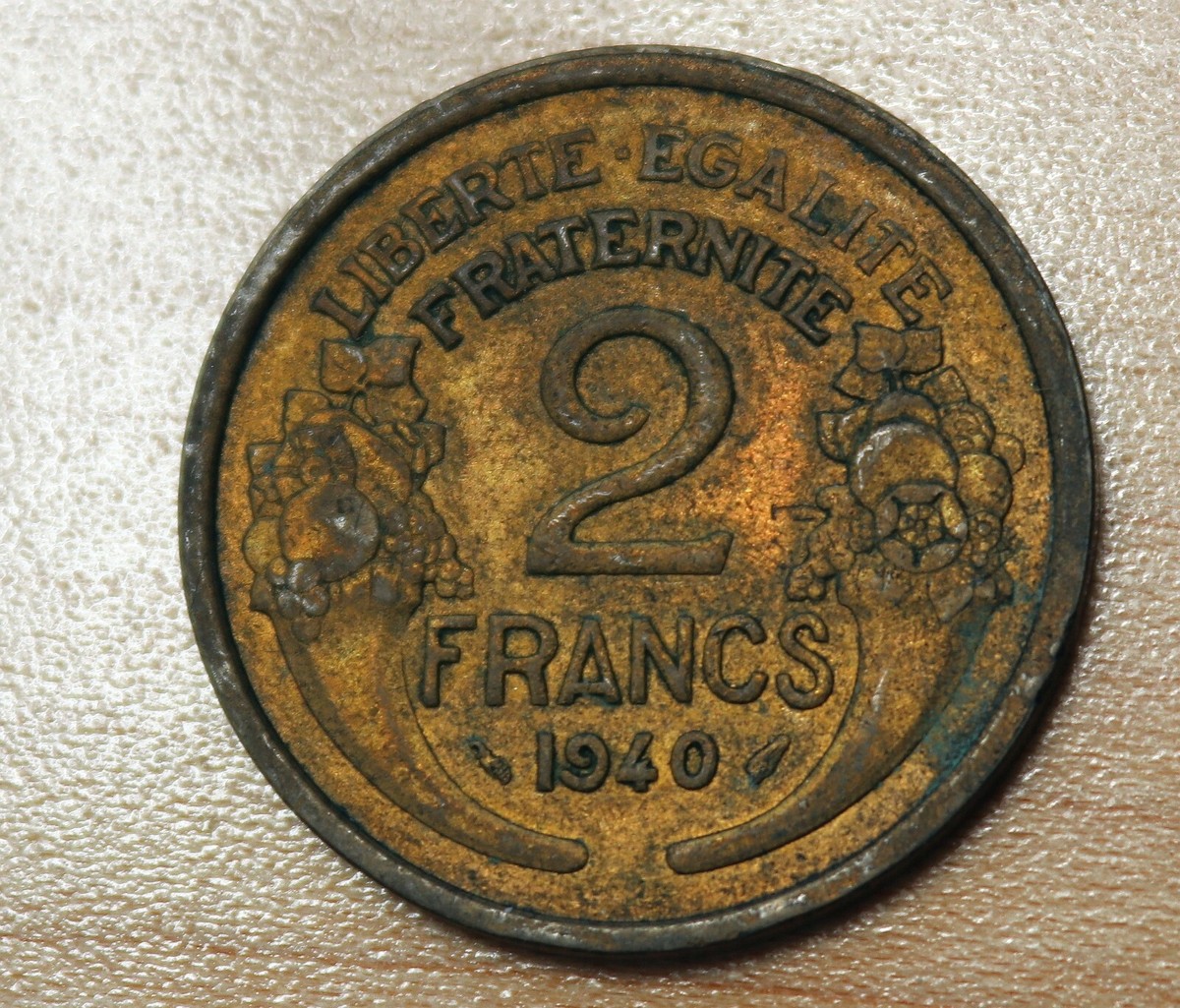
As price increases were more rapid in France than abroad, the government was compelled to devalue the franc on several occasions. For these structural reasons, a deficit in the French balance of payments emerged; what is certain is that an overvaluation of the national currency could only exacerbate export difficulties. To relieve this situation, the pound was officially set at 176.25 francs and the dollar at 43.8 francs. In November 1944, a first provisional “adjustment” placed the pound at 200 francs and the dollar at 49.625. This shift proved insufficient to restore parity between French and foreign prices, and in December 1945 the franc was devalued: the pound rose to 480 francs and the dollar to 119.11.
After this date, the rise in French prices continued. Exports were constrained while resources were drawn toward domestic demand, which largely exceeded productive capacity. Markets dominated by sellers, where shortages produced long queues, did not encourage firms to make efforts to export. Output was sold in advance and competition was absent. In addition, the foreign-exchange black market diverted part of French earnings in foreign currencies, increasingly necessary to pay for imports. The government therefore created a free foreign-exchange market while simultaneously devaluing the franc by 80 percent on January 26, 1948: the pound was set at 864 francs and the dollar at 214.39. The free market was supplied by half of export proceeds and by all foreign currency derived from invisible transactions and capital movements. Rates in this market stood well above official levels, with the dollar quoted at more than 300 francs. This new, disguised devaluation prompted protests from Great Britain and the International Monetary Fund, although it likely favored French exports to the dollar area.
Further adjustments to the exchange regime were made in March 1948, October 1948, and April 1949. In October 1948, the pound was quoted at 1,062 francs. During the general devaluations of September 1949, multiple exchange rates were abandoned and the pound was fixed at 980 francs and the dollar at 350. During the inflation of 1946–1949, rising domestic prices led to successive devaluations, contrary to the period 1919–1926, when a fall in the exchange rate triggered price increases. At that earlier time, the exchange market was free; between 1946 and 1949 the process would probably have been similar had exchange controls not existed.
These monetary adjustments were insufficient to restore balance-of-payments equilibrium. A country lagging in industrial development and devastated by war could not recover its export capacity before rebuilding its productive capital. Should the International Monetary Fund not have distinguished between “fundamental disequilibria” and cyclical imbalances? The former could not be remedied by purely monetary measures, which would have proved ineffective. For this reason, exchange controls and quantitative restrictions remained the most effective defenses for European countries during the reconstruction period.
After Liberation, French imports were strictly controlled and importers were required to obtain import licenses. The franc and all European currencies were inconvertible, except within bilateral agreements that later became multilateral with the implementation of the Marshall Plan in 1948.
Before the war, the current balance of payments was roughly in equilibrium. In 1945, however, total receipts covered only 19 percent of external expenditures; in 1946 this share rose to 27.5 percent; in 1947 to 51 percent; in 1948 to 49.5 percent; and in 1949 to 76 percent. The French deficit was financed through various means, ranging from the requisition of private assets in gold and foreign currencies to public borrowing, payments agreements, and U.S. grants amounting to 754 million dollars in 1948, 855 million in 1949, and 509 million in 1950. In 1947, France experienced a genuine external payments crisis, resolved only through foreign credit and the initial disbursements of American aid.