
Ignorance of economic mechanisms largely accounts for this policy, which helped direct part of the active population toward an unproductive and already overcrowded commercial sector, drawn, if not by the black market, at least by the prospect of unlimited profits. In December 1945, the right to establish new commercial businesses was restored, and nothing then stood in the way of the shopkeepers’ triumph. This greatly delayed the rationalization of distribution channels through concentration and intensified the shortage of industrial labor.
At the end of the war, the government undertook a reorganization of prices and wages that had been frozen by a decree of November 1939. During the Occupation, the wage freeze had been far stricter than the price freeze. The effects of the black market and authorized increases in official prices led to a considerable decline in workers’ purchasing power. Most firms therefore absorbed the wage increases decided, after the Liberation, by the regional Commissioners of the Republic without difficulty. Some companies even paid above the established wage without declaring it. This first wave of wage adjustments, involving increases of 30 to 50 percent depending on region and sector, did not immediately trigger price rises. Company treasuries, strengthened by forced savings during the war years, easily bore the higher costs. The situation changed in early 1946, when a series of ministerial orders introduced a genuine “reorganization” of wages, that is, new increases of between 30 and 35 percent. Between March 1945 and March 1946, the wholesale industrial price index doubled; it tripled between March 1945 and October 1946. Experts at the I.N.S.E.E. estimated that the inflationary process was set in motion during this period. The overall wholesale price index rose from 267 in May 1944 to 1,977 in November 1948.
On July 4, 1946, the National Conference on Prices and Wages convened at the Palais Royal, with employers’ and workers’ unions represented. On July 29, 1946, the government accepted a general wage increase of 25 percent and the effective equalization of male and female wages. It was made clear that industries were to absorb this rise without raising prices, except in certain highly labor-intensive branches. The growth of production justified the government’s position; nevertheless, new price increases were authorized after examination of the files that had remained pending before the Palais Royal Conference. This led to the “queues of increases” in the autumn of 1946, followed by a 5 percent reduction in January 1947 and another 5 percent cut on March 1, 1947.
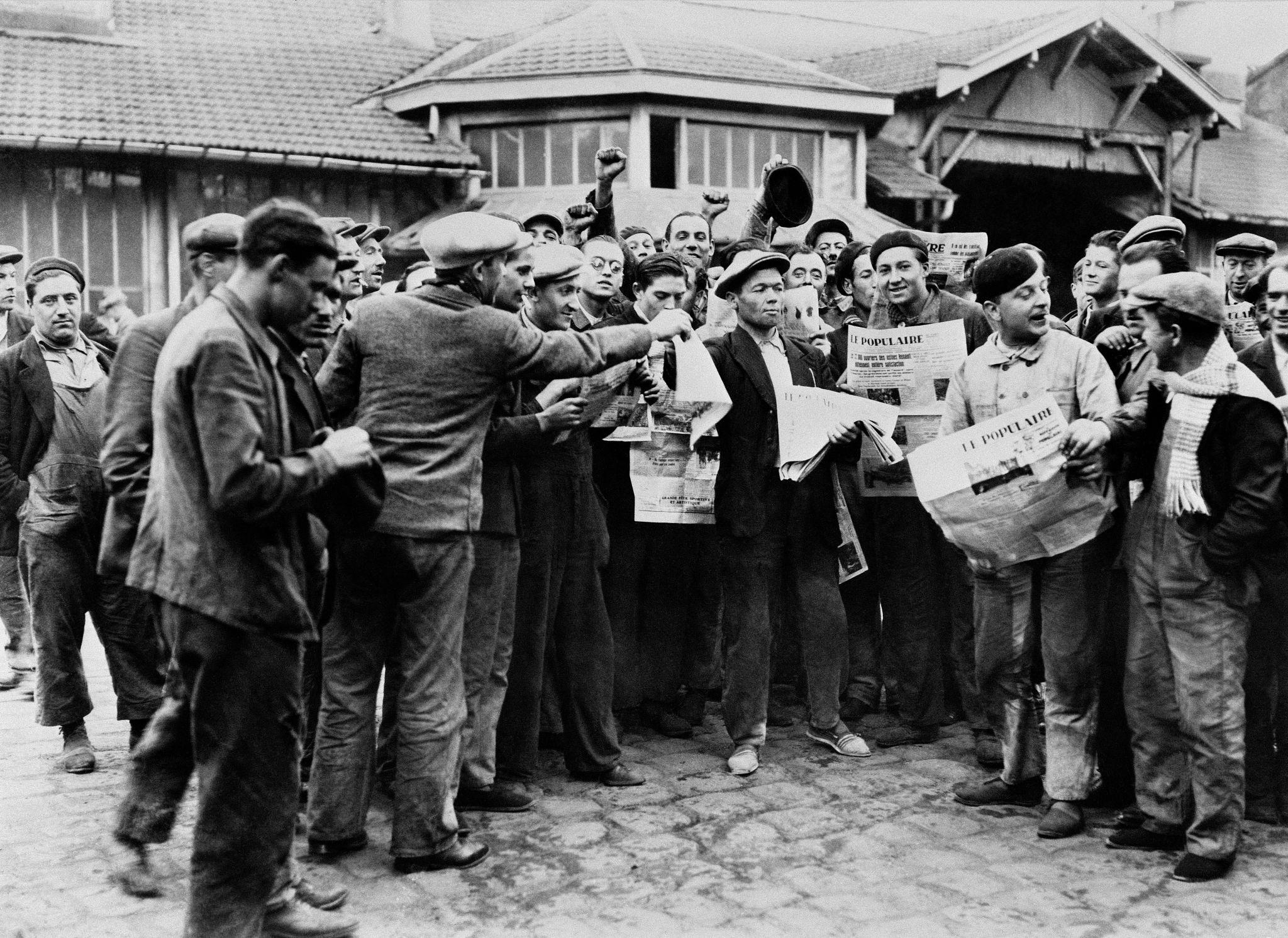
At the end of 1947, the inflationary process revived, aggravated by new measures. The Ramadier government granted production bonuses to wage earners and increased the price of public services. While wholesale industrial prices rose by 22 percent between August 1946 and October 1947 (index 733 to 1,796), they increased by 95 percent between August 1947 and October 1948. Wage demands multiplied and unions launched numerous strikes. On September 6, 1948, the Schuman ministry granted a one-time bonus of 2,500 francs to all wage earners, soon followed by a uniform 7 percent increase decided by the Queuille ministry in October 1948, while the schedular tax on wages was replaced by an employers’ contribution. Despite the transport allowance granted to Parisian workers, social discontent, resulting from the rising cost of living, continued to manifest itself in numerous strikes, the most serious and longest of which broke out in the coal mines on October 4, 1948. Only at the end of 1948 did social conflicts subside with the temporary easing of inflationary tensions.
In 1949, the last vestiges of wartime dirigisme disappeared. By early 1950, rationing no longer existed, and the law of February 1950 restored freedom of wage agreements while creating the “guaranteed interprofessional minimum wage” (S.M.I.G.). Inflation would reappear with the Korean War in 1950–1951.