
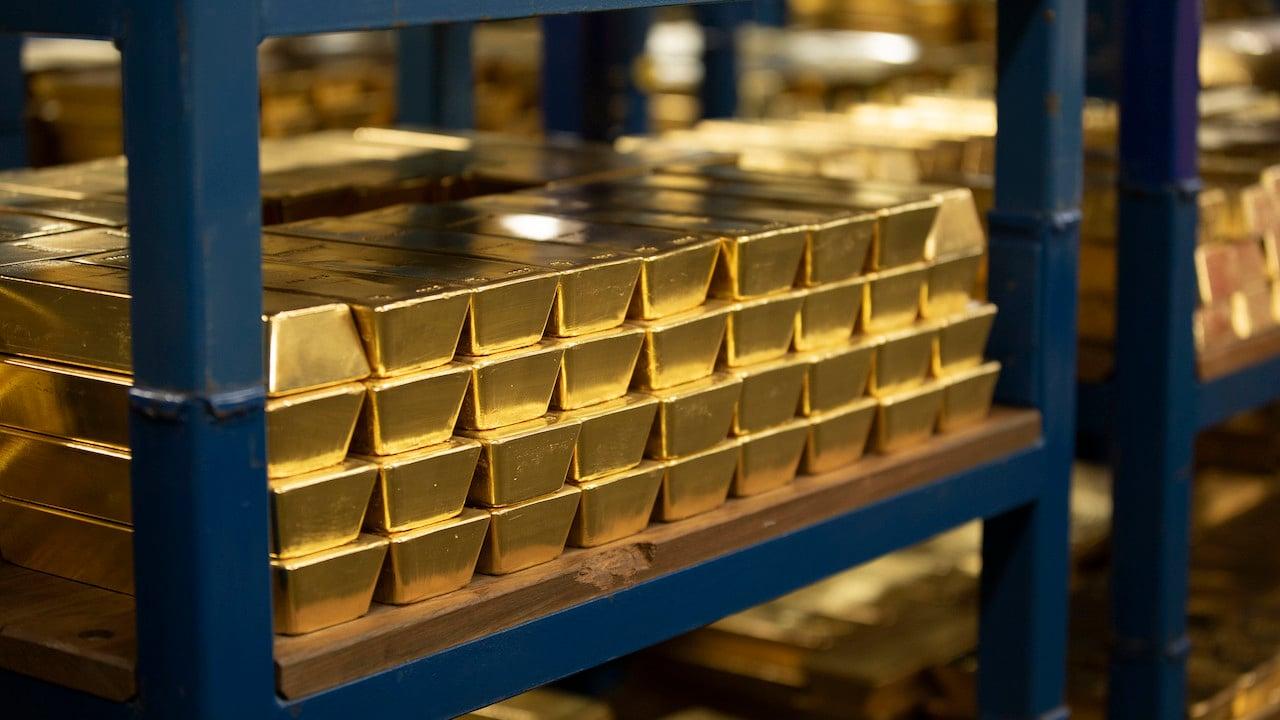
Two main views are usually expressed regarding international liquidity: first, that its structure is unbalanced due to insufficient gold production for monetary purposes; second, that its overall volume is too small relative to the financing needs of world trade. In the ministerial declaration of the Group of Ten on August 1, 1964, which announced the creation of the Ossola Committee to study new reserve instruments, these concerns were explicitly raised.
Jacques Rueff strongly criticized this perspective in an article published in Le Monde on September 24, 1965, titled “Irrigation plans during the flood.” He argued that there were already too many international means of payment, particularly in the form of foreign exchange reserves. Referring to the Ossola Committee report, he maintained that the central issue for countries facing inflation was not the creation of liquidity but the neutralization of excess currency generated by the persistent balance of payments deficit of the United States.
Rueff’s argument points to the effects of balance of payments movements on domestic money supply. Inflows of foreign currency and gold can be inflationary in surplus countries, since these inflows are exchanged for domestic currency through the banking system, increasing liquidity and lending capacity. However, this analysis has limits. First, monetary and economic policy can offset these effects. Second, empirical cases challenge a direct link between reserve accumulation and inflation: West Germany, despite large reserve surpluses, did not experience the highest inflation, while France, even as a deficit country, faced strong inflationary pressures in 1957–1958. Later, in 1964–1965, France combined a surplus balance of payments with stagnation and significant inflows of gold and foreign exchange. These examples suggest that Rueff’s objection remains partly theoretical.
Statistical evidence provides further insight. Between 1952 and 1964, global reserves of gold and foreign exchange increased by 38%. However, foreign exchange reserves grew by 78%, while gold reserves rose by only 20%. Gold represented 68% of total reserves in 1952, compared to 59% in 1964. The increase in foreign exchange reserves—approximately 12.3 billion dollars—closely matched the growth of short-term U.S. external liabilities. Over the same period, gold reserves increased by only 6.9 billion dollars.
The distribution of liquidity reveals a clear divergence between industrialized and developing countries. Not only did additional gold flow primarily to wealthier nations, but poorer countries lost both gold and foreign exchange reserves between 1952 and 1964. Meanwhile, imports in non-industrialized countries rose by 41.5%, compared to a 125% increase in industrialized countries, whose reserves also grew significantly. Imports expanded faster than gold reserves, and a shortage of international means of payment was avoided largely through the supply of U.S. dollars—linked to the external imbalance of the United States.
The International Monetary Fund has noted that an abundance of monetary instruments alone is insufficient to drive trade expansion. In 1938, global gold reserves represented 110% of total imports, compared to only 33% in 1961, yet international trade was not higher in 1938 than in 1928. This indicates that liquidity levels alone do not determine trade growth. However, relying exclusively on gold as a means of payment would severely constrain global commerce, making an international credit system indispensable.
Overall, the data highlight structural tensions within international liquidity. Most analysts agree that the existing system cannot persist indefinitely. The prolonged U.S. deficit, combined with the growing gap between its short-term external liabilities and gold reserves, represents a central concern for the stability of the international monetary system.